For over sixty years Venerable Master Chin Kung has been learning the Buddhadharma. For over fifty, with skilful means, great patience, and profound clarity–-and the sincere wish that all beings awaken and find true happiness–-Venerable Master Chin Kung has tireless taught all who wished to learn.
Countless gems of wisdom exist throughout all his talks, writing, and correspondence. The book that you are holding holds just a taste of them. A taste of the Buddhadharma for you to savor.
Envisioned as a land far to the West; understood to already be deep within us, lies the destination of Pure Land Buddhists-Amitabha Buddha's Land of Ultimate Bliss-a land of peace, security , and freedom. The way to be reborn in that land was introduced by the Buddha almost three millennia ago and is known as Pure Land Buddhism, one of the most widely practiced forms of Buddhism. Going Home to the Pure Land contains the Amitabha Sutra recitation session, and introduces the Pure Land principles, teachings, and methods of practice. Whether practicing in a group or on your own, Pure Land Buddhism can help you eliminate suffering and attain happiness and awakening. The book contains both a practice session and In One Lifetime: Pure Land Buddhism by Venerable Wuling.
How Will I Behave Today and the Rest of My Life
How Will I Behave Today and the Rest of My Life, Venerable WuLing A commentary-cum-storybook based on Guidelines for Being a Good Person. Themes of love and respect for parents and elders, siblings and friends, and, indeed, all beings as well as of trustworthiness and honesty run throughout the stories in a mixture of humor, poignancy, and old-fashioned fables.
Author:Shi, Chin Kung.
Title:Essence of the infinite life sutra/Chin Kung Shi.
Foreword:In August 1993, Venerable Master Chin Kung gave an eight-hour lecture series titled Essence of the Infinite Life Sutra at Ta Kioh Buddhist Temple in San Francisco, USA. The Hwa Dzan Lecture Notes Team transcribed the recorded lectures and organized them. In addition, relevant segments from the lectures on the Infinite Life Sutra given in San Jose in June 1992 were excerpted as a supplement.
This compiled transcription was presented to Venerable Master Chin Kung for correction and editing. Titled Lecture Notes on the Essence of the Infinite Life Sutra, it has been published and freely circulated, humbly offered to readers for them to benefit from the Dharma.
Buddhism is not a religion because ‘belief’ in the Buddha’s teachings is not blind belief, blind faith, and far from superstition. Shakyamuni Buddha taught us not to blindly believe what he tells us, he wants us to try the teachings and prove them for ourselves. The Buddha wants us to know, not merely believe. The Buddha’s teachings flow from his own experience of the way to understand the true face of life and the universe, and show us a path of our own to taste the truth for ourselves. This is much like a good friend telling us of his trip to Europe, the sights he has seen, and the way to go there and see for ourselves. The Buddha uses a perfectly scientific way of showing us reality in its true form.
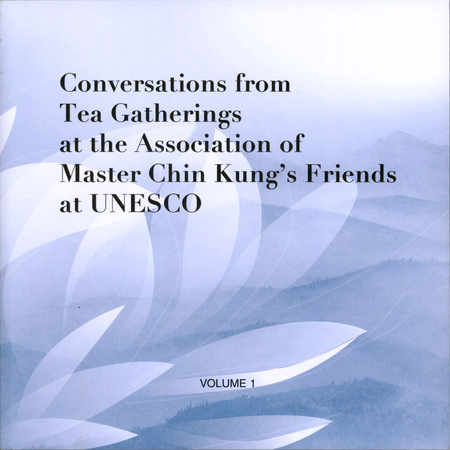
Conversations from Tea Gatherings at the Association of Master Chin Kung's Friends at UNESCO
編號
HZ21-025
版次
01
規格
21 X 21 公分
庫存量
50
簡介
The book is Master Chin Kung came to the association .
Various ambassadors came to visit Master Chin Kung at times .
They talked about anything and everything.
From personal and family issues to topics about career, society , country and world as a whole , they conversed without reservation.
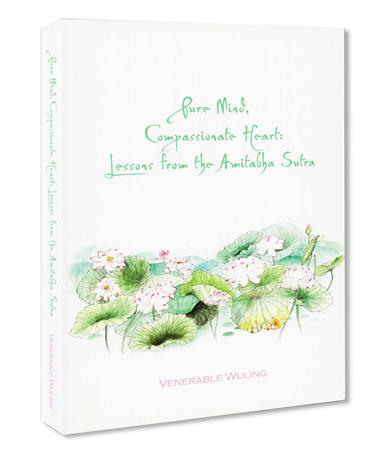
Pure Mind, Compassionate Heart : Lessons from the Amitabha Sutra
編號
HZ50-032
版次
01
規格
32開 平裝(13*19公分)
庫存量
47
簡介
The Amitabha Sutra is one of the three primary teachings by the Buddha on the Pure Land school of Mahayana straightforward as one reads of the Western Pure Land's marvelous adornments including golden sand , jeweled trees, birds that sing the teachings, and flowers that float down from the sky.
Closer study, however, will show that the sutra is incredibly profuse with symbolic representations and profound teachings.
As a consequence, commentaries on it have long proved invaluable to help readers and practitioners delve more deeply into the sutra.
Basing Pure Mind, Compassionate Heart on past commentaries of Pure Land patriarchs and masters, Venerable Wuling, a Pure Land Buddhist nun, offers this book as a brief introduction to this core Pure Land teaching, the Amitabha Sutra.
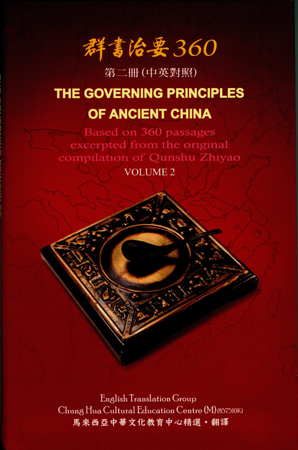
群書治要360 第二冊 (中英對照版) THE GOVERNING PRINCIPLES OF ANCIENT CHINA Based on 360 passages excerpted from the original compilation of Qunshu Zhiyao VOLUME 2
編號
HZ35-23-01
規格
特32開 圓背軟皮精裝(11*17公分)
庫存量
43
簡介
At the beginning of the Zhenguan Era, Emperor Taizong (599-649) of the Tang dynasty decreed that Qunshu Zhiyao (The Compilation of Books and Writings on the Important Governing Principles) be compiled. At the tender age of sixteen, Taizong enlisted himself in the army, and joined his father’s forces to try to stop the turmoil that was going on in the society. For more than ten years, he dwelt himself in military matters. After he ascended to the throne at the age of twenty-seven, he laid down his armor and began to promote culture and education, paying particular attention to the principles of governing, and bringing peace to the country. He sought to rejuvenate the nation from the aftermath of civil strife by restoring order to life, lessening the burdens of ordinary people, and increasing prosperity.
Although Taizong was an intelligent, brave, and eloquent man, he regretted that his earlier military expeditions had prevented him from obtaining much formal education. He also learned from the mistakes made by the fallen Sui dynasty and realized that to start a new dynasty was no easy task, and to sustain it would be even harder. Hence during his reign, he encouraged his ministers to point out his mistakes and to candidly criticize his imperial policies. To make up for lost time, Taizong ordered two advisors, the honorable Wei Zheng and Yu Shinan, to comb through all the historical records on imperial governing principles from the Six Classics, the Four Collections of History and the Hundreds of Schools , and to extract the most important lessons related to the cultivation of oneself, management of family, good government, and ways to bring about peace in the world. The result was a collection, titled Qunshu Zhiyao, carefully excerptedfrom 14,000 books and 89,000 scrolls of ancient writings—500,000 words in all, and covering sixty-five book categories—dating from the era of the Five Legendary Emperors to the Jin dynasty.
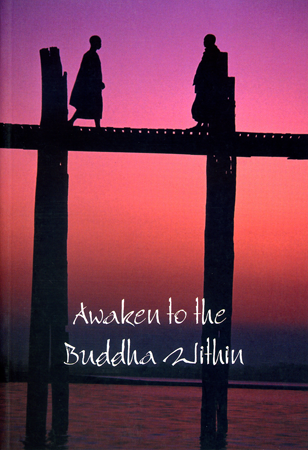
Twenty-five hundred years ago, when the Buddha was teaching what he had awoken to, his world was similar in many ways to our world today. There were great centers of culture, and there were lands of stagnation. There were rulers with great power who thirsted for even more, and there were oppressed people who only wanted to live in peace. There were men who said that they alone held the key to spiritual secrets, and there were those who searched for differ¬ent answers. There were people who had great wealth, and there were those who had nothing. There were people who said we must change, and there were those who denied there was anything wrong. Perhaps that distant land and time is not that distant after all. Greed, anger, ignorance, and delusion are still very much with us. But they do not have to remain with us for each of us has the ability to transform them into selflessness, compassion, and understanding. (From the back cover)
Beginning with his life, Awaken to the Buddha Within explores what the Buddha experienced from impermanence and causality to compassion and altruism. Understanding his teachings of morality, concentration, and wisdom will help us to find within ourselves the answers we are seeking today.